
Webfleet Tyre Pressure Monitoring System (TPMS)
A must have for long haul road transport, this innovative system boasts a return on investment between 6-9 months. Cut down on needless expenses caused by improper tyre inflation during transit. 20% of commercial tyres on the road are significantly underinflated causing a downtime high for haulage companies. Features of the TPMS system are:
- Live view of tyre pressures and temperature on the Webfleet platform
- Alerts driver and office of any slow leaks
- Pairs trailer to truck on Webfleet through LINK 740 tracking unit
- Maintenance tasks are automatically generated in Webfleet for low battery or missing sensor
- Dedicated app for TPMS monitoring in the workshop
So How Does TPMS Work?
A TPMS is used on regularly on cars but combining this system with Webfleets online fleet management software offers much greater detail and benefits. The tyre pressure data is sent through an online cloud to be displayed to fleet managers and drivers. An instant notification is sent when the pressure drops or a slow leak is detected.
Webfleets tyre pressure monitoring system is a form of direct TPMS. Indirect TPMS uses existing wheel speed, ABS and accelerometers sensors to calculate tyre pressure and if it may have changed. Direct TPMS connects directly to the wheel to give more accurate data. It does not need resetting after each tyre inflation and has a battery life of approximately a decade.
The exact tyre pressure data flows through 2 devices to appear on the Webfleet screen. Firstly, the sensors on the tyres send the information to an auxiliary device (LRX 100). This is connected to a LINK 740/710 tracking unit which reverts all the information to your dedicated Webfleet telematics service platform.


How can Webfleet Direct TPMS save you money?
There are many ways in which TPMS can save your business on unwanted expenses. The direct savings come from an extended tyre life and. The extended savings come from a reduction in breakdown costs, less downtime and a severe drop in penalty charges. A 2.5% increase in fuel consumption from using correctly inflated tyres. Bridgestone calculate that having correct tyre pressure can save £1500 per year on a truck that drives 80,000 miles per year.
Which vehicles support Webfleet TPMS?
Standard HCV types have been validated to work with a single LRX 100 unit combined with a LINK device.

Certain HCV types will require a double LRX 100 fitting to accommodate all tyre sensor information

How much will Webfleet TPMS cost per vehicle?
This question much depends on how many wheels the vehicle has. The HCV tractor trailer combination above will require:
- 2x LRX 100 (£149 + VAT each)
- Sensors for the truck unit (£189 + VAT)
- 6 wheel trailer would need 3x Rigid sensor 2 pack (£59 + VAT each).
This would all equate to around £800 per unit assuming a LINK tracking box is already fitted to the truck with a Webfleet subscription.
The TPMS additional subscription is only £5.00 per month per vehicle. Rental units are available for the LRX 100 and LINK boxes.
Bridgstone predict a saving of £1500 a year with this system giving the pre-mentioned return on investment at 6-9 months. We also must mention the amount of time saving this system offers. All tyre information is recorded in Webfleet so only tyres showing a warning need to be maintained. The severity of the pressures are colour coded in Webfleet as shown below
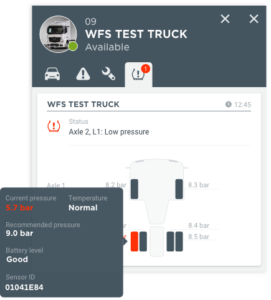
Of course we can all just watch a video to see the technology in action. This system will keep drivers happy too, which is of high importance.
Click the link here to see a Webfleet Youtube video